Memory Care Cost in Berks County and How It Differs
A Berks family member with dementia isn't safe at home. Here is what a secured memory care unit costs here, how it differs from assisted living, what Pennsylvania requires of the unit and its staff, what to ask on a tour, and where a caregiver gets support.
If memory care cost in Berks County is the question tonight, because a husband, wife or parent isn't safe at home any more, plan on about $7,600 a month as of 2026, inside a spread that runs from roughly $4,800 to $13,300. That's the average and the range a referral service reports for memory care around Reading; no survey of care providers prices memory care here, and the one that covers the Reading area puts assisted living at about the same figure.
The number you'll pay is the one on the home's own fee schedule, which it has to hand you. Start your list from the county senior living page. This is general information; whether your family member needs a secured memory care unit is a question for their doctor and for the Berks County Area Agency on Aging (610-478-6500).
How much does memory care cost in Berks County?
The one survey of care providers that covers the Reading area has no memory care category, so the table carries the closest published figures.
| Figure | Amount | What it covers |
|---|---|---|
| Assisted living, Reading metropolitan area, median monthly rate | $7,586 | A private one-bedroom in an assisted living community; providers surveyed July to November 2025 |
| Memory care, Reading area, average | $7,585 a month | Communities around Reading that work with a referral service, whose page puts the range at $4,800 to $13,320; the period isn't stated; read November 2, 2026 |
The first row comes from the CareScout Cost of Care Survey 2025, published in March 2026; the second from A Place for Mom's Reading memory care page.
Neither number is a quote; the home's fee schedule is.
Almost every Berks home with memory care is licensed as a personal care home, the state's license for a home that gives shelter, meals, supervision and help with personal care to people who don't need 24-hour nursing care. Its contract must list a fee schedule with the actual amount of each charge, the actual rates for food, shelter and services, and the refund conditions, and it must promise at least 30 days' written notice before the home changes the contract. For a secured unit it must also disclose the unit's services, admission and discharge criteria, change-in-condition policies, special programming, and costs and fees.
If a home quotes you a base rate plus care levels, ask for the two things the contract has to carry: the fee schedule with the actual charge for each service, and the list of services your family member's care plan calls for with the actual rates. I'd read the contract and the unit's disclosure before the next tour, not after.
What's the difference between memory care and assisted living?
A secured unit gives your family member things a regular assisted living room doesn't. The doors are locked, and they unlock on their own in a fire or a power failure. The staff have extra dementia training and more hours of care per resident than a regular room. There's a written care plan covering medical, social, cognitive and safety needs, and a resident with dementia is admitted after a doctor, physician assistant or nurse practitioner documents the diagnosis and the need for the unit.
It isn't a separate license, though. Pennsylvania calls it a secured dementia care unit when it's inside a personal care home. Inside an assisted living residence, the state's other license for this kind of home, it's called a special care unit; that license can serve higher needs and must have a nurse on site or on call.
As of November 2026, Berks County has 27 licensed personal care homes and 2 licensed assisted living residences, and 13 of the personal care homes have a state-approved secured dementia care unit. The state lists no special care unit in a Berks assisted living residence, so a licensed secured unit here means a personal care home. The Heritage of Green Hills is one, a personal care home whose secured dementia care unit is licensed for 23 beds; its site describes private memory care suites and a secure patio and courtyard garden.
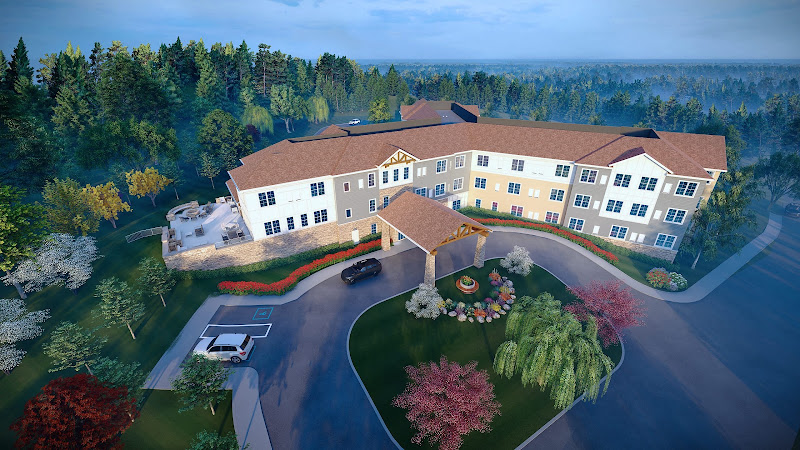
200 Tranquility Ln, Shillington, PA
The Residence at Village Greens in Sinking Spring also has a licensed secured unit, 25 beds; its site lists secured entries, cameras, staff on site around the clock and emergency call systems in apartments.
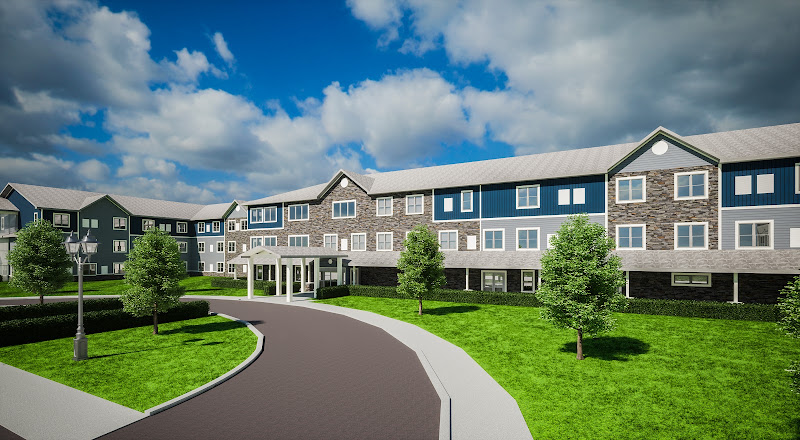
4400 Haines St, Sinking Spring, PA
Ask the home for a written description of the unit's purpose, its security, its activities, its staff training and its family programs; the state requires assisted living residences to hand one out, and a personal care home can give you the same.
Our senior services guide covers the other levels of care and Medicaid in a nursing home.
What does Pennsylvania require of a secured dementia care unit?
Before the move there's a medical evaluation and a cognitive screening; within three days of moving in there's a support plan, the written care plan, which is revised on a schedule and whenever the condition changes. Staff time is set in hours per resident rather than a ratio, and direct care workers get dementia training on top of their basic training hours. The doors unlock on an alarm, six kinds of activity are offered every week, and the home owes notice before a discharge.
| What the state requires of a secured dementia care unit | The rule, for a personal care home |
|---|---|
| Medical evaluation documenting the dementia diagnosis and the need for the unit | Within 60 days before admission, on the state's form |
| Written cognitive screening | Within 72 hours before admission |
| Consent | The record shows the resident and the family member or agent they named did not object to the move |
| Written care plan (the support plan) | Within 72 hours of admission; revised at least once a year and whenever the condition changes; the need for the unit reassessed yearly |
| Bedrooms | No more than two residents to a bedroom |
| Activities | Six kinds offered at least weekly (exercise, self-care, social, crafts, sensory and memory, outdoor); participation voluntary |
| Staff time | Direct care staff available for at least 2 hours a day per resident, 75 percent of it during waking hours; the state sets hours, not a ratio |
| Dementia training for direct care staff | 6 hours a year, on top of the 12 hours every direct care worker gets |
| Locks and alarms | Locks open on a fire alarm, smoke or heat detector or power failure and by keypad; the keypad directions are posted at the door; the fire alarm is tied to the fire department or a 24-hour monitoring service |
| If the home ends the stay | 30 days' written notice citing the reasons |
| What you get in writing | The contract discloses the unit's services, admission and discharge criteria, change-in-condition policies, programming, and costs and fees |
These are the requirements in Pennsylvania's personal care home regulations as in force on November 2, 2026.
Those are minimums; a home can do more, and the tour is where you find out whether it does.
What should you ask on a memory care tour?
Visit more than once, at different times of day, and once unannounced, and stay for a meal. Ask for the fee schedule and the unit's written disclosure of costs and fees, the hours of dementia training staff get and their qualifications, the ratio of residents to staff on the unit, and the posted activity calendar.
Ask about the discharge policy, what happens when the money runs out, and whether residents can age in place, staying in the same unit as needs grow. Before you go, read the home's latest inspection summary; the Department of Human Services' provider directory, searchable by county at humanservices.dhs.pa.gov, lists it beside each home's license, capacity and secured unit. Pick two or three units from the county senior living page and book the first visit.
Where can a caregiver get support in Berks County?
The Alzheimer's Association's Southeastern Pennsylvania Chapter serves Berks with free caregiver and early-stage support groups and a Helpline, 800-272-3900, open around the clock; take the questions about the disease itself there and to your family member's doctor.
The Berks County Area Agency on Aging (400 E. Wyomissing Ave., Mohnton; 610-478-6500; weekdays 8 to 5) runs the Caregiver Support Program. There's no income test to join, and the person you care for may be any age if they have Alzheimer's or a related disorder. What income decides is how much of each expense the program pays back, judged on the household income of the person being cared for: all of it at or below 200 percent of the federal poverty level, tapering to 10 percent just under 380 percent of the poverty level; the agency works out where your household falls.
It reimburses respite, a paid break for the caregiver, plus supplies and home modifications. The cap is $600 a month, and $5,000 over a lifetime for home modifications. At $600, it's help while someone is still at home, not a way to pay for a unit. It isn't available to a family already in Community HealthChoices or LIFE, Medicaid's long-term care programs, which pay for care at home and in nursing homes. What that first call is like is in our guide to the Area Agency on Aging.
Frequently asked questions.
Does Medicare or Medicaid pay for memory care in Pennsylvania?
Medicare doesn't pay for long-term care. Personal care homes and assisted living residences are typically not covered by Medicaid, and each home sets its own rates. Medicaid's long-term care programs pay for care at home and in a nursing home; if the money for a unit runs out, start with the Berks County Area Agency on Aging (610-478-6500), and the senior services guide covers Medicaid in a nursing home.
Can a husband or wife without dementia live in the unit too?
Yes. A spouse without dementia may live in the secured unit if the resident wants that.
Does Pennsylvania set a staff-to-resident ratio for memory care?
No. The state sets hours of direct personal care per unit resident each day rather than a ratio.
Sources
- Pennsylvania Code, 55 Pa. Code Chapter 2600, Personal Care Homes: the secured dementia care unit rules (§§ 2600.231 to 2600.239), direct care staffing hours (§ 2600.57), training (§ 2600.65), the resident-home contract (§ 2600.25) and refunds (§ 2600.28).
- Pennsylvania Code, 55 Pa. Code Chapter 2800, Assisted Living Residences: the special care unit rules (§§ 2800.231 to 2800.239), staffing (§ 2800.57), training (§§ 2800.65, 2800.69), the resident-residence contract (§ 2800.25) and transfer and discharge (§ 2800.228).
- Pennsylvania Department of Human Services, Human Services Provider Directory (Berks County search, read November 2, 2026): the 27 licensed personal care homes and 2 assisted living residences, the 13 homes with a secure dementia care unit and each unit's capacity, and the inspection summary link on every row.
- Pennsylvania Department of Human Services, "Personal Care Homes and Assisted Living Residences" and its FAQ: what each license provides, the nurse requirement for assisted living residences, the visiting advice, and the sentence that these homes are typically not covered by Medicaid.
- Act 56 of 2007 (P.L. 402), § 1057.3: a personal care home may not provide supplemental health care services; an assisted living residence must provide or arrange them.
- Medicare.gov, "Long-term care": Medicare does not pay for long-term care in any setting.
- CareScout, Cost of Care Survey 2025, the cost-of-care tool set to Reading, PA (read November 2, 2026) and the Ranked Median Costs by State Data Tables (March 2026): the Reading-area assisted living median ($7,586 a month); memory care is not a category in the survey.
- A Place for Mom, memory care in Reading, PA (read November 2, 2026): the Reading-area memory care average of $7,585 a month; a referral company's partner-community data, not a provider survey.
- The Heritage of Green Hills, memory care and The Residence at Village Greens, FAQs (read November 2, 2026): what each community says about its memory care setting.
- Alzheimer's Association, "Long-Term Care": the questions to ask when choosing a care setting and the advice to visit at different times and ask for the inspection report.
- Alzheimer's Association, Southeastern Pennsylvania Chapter and its support groups page: the chapter serves Berks County (the county's older link, alz.org/delval, now points here), the 24/7 Helpline 800-272-3900, and that its support groups are free.
- Pennsylvania Department of Aging, "Apply for the Caregiver Support Program" and the program page: who qualifies, the reimbursement scale, the $600 monthly and $5,000 lifetime caps, and the Community HealthChoices and LIFE exclusion.
- Berks County Area Agency on Aging and its Care at Home page: the office's address, phone and hours, and the Caregiver Support Program's respite and financial help.
- Pennsylvania Department of Human Services, "Community HealthChoices" and "Enroll in the LIFE Program": Medicaid's long-term care programs, which pay for care at home and in nursing homes for people who need a nursing-home level of care.